
The High-Speed Tablet Inspection
Introduction
In pharmaceutical manufacturing, product quality is non-negotiable. Even minor tablet defects such as cracks, chips, discoloration, or broken edges can impact product efficacy, regulatory compliance, and brand reputation.
As production volumes continue to increase, traditional manual inspection methods struggle to keep pace with modern manufacturing demands. Pharmaceutical manufacturers require inspection systems capable of detecting defects in real time while maintaining high throughput and consistent accuracy.
To address these challenges, PRAL VR developed an AI-powered high-speed tablet inspection system that combines machine vision, intelligent automation, and real-time decision-making to ensure only compliant tablets proceed through the production process.
The Challenge
Tablet manufacturing environments operate at increasingly high production speeds, making quality inspection a critical yet challenging process.
Many manufacturers continue to rely on manual sampling or end-of-line inspection methods, which often result in defects being discovered only after a significant number of tablets have already been produced.
Common tablet defects include:
- Cracks
- Chipped edges
- Broken tablets
- Surface roughness
- Surface contamination
When these defects are detected late in the process, manufacturers face:
- Increased product wastage
- Higher rework costs
- Batch inconsistencies
- Production inefficiencies
- Regulatory compliance risks
- Potential product recalls
The customer required a solution capable of performing continuous, real-time inspection without slowing down production.
Why Traditional Inspection Was Not Enough
Manual inspection methods are often limited by operator fatigue, subjective judgment, and production speed constraints.
As manufacturing throughput increases, maintaining inspection consistency becomes increasingly difficult. Even experienced operators can miss subtle defects when inspecting large volumes of products over extended periods.
Pharmaceutical manufacturers require inspection systems that can provide reliable, repeatable, and objective quality verification while maintaining compliance with strict industry standards.
The PRAL VR Solution
PRAL VR developed a fully automated machine vision inspection system specifically designed for high-speed tablet quality control.
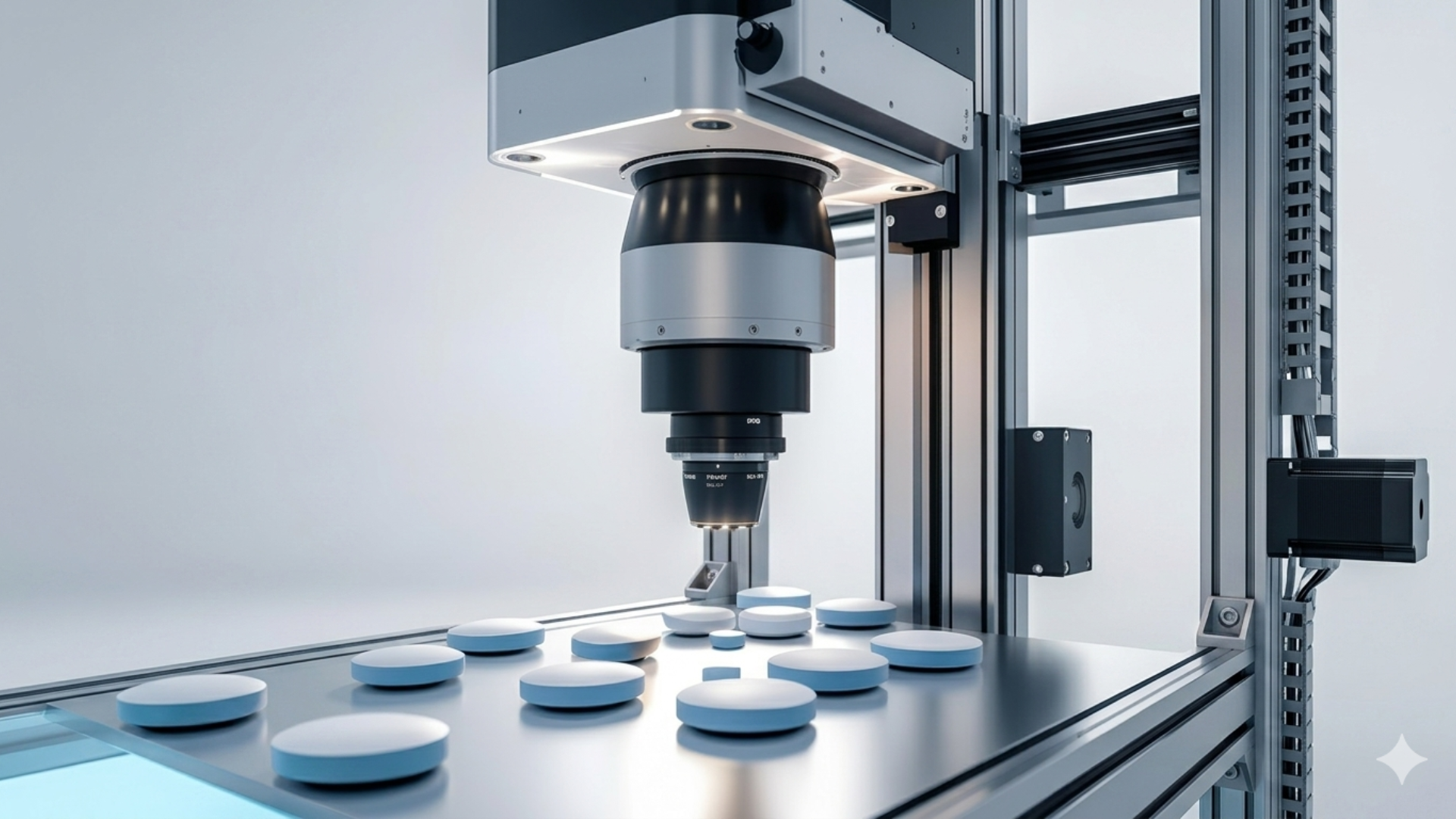
The system integrates industrial cameras, industrial lights, AI-powered defect detection algorithms, PLC connectivity, and an automated pneumatic rejection mechanism to create a complete in-line inspection solution.
As tablets move through the production line, sensors trigger image acquisition at precisely the right moment. High-resolution cameras capture images of each tablet, while AI models analyze them in real time for defects.
Defective tablets are immediately identified and automatically removed from the production stream, ensuring that only compliant products continue downstream.
Key Features
Impact
The implementation delivered significant improvements in pharmaceutical quality assurance and manufacturing efficiency.
Early Defect Detection
Defects are identified immediately during production, preventing defective products from progressing through downstream processes.
Reduced Manual Inspection Dependency
Automation significantly reduces reliance on human inspection while improving consistency and accuracy.
Lower Product Waste
Early identification and rejection of defective tablets help minimize scrap and reduce manufacturing losses.
Improved Batch Consistency
Automated inspection ensures uniform quality standards across all production runs.
Increased Production Efficiency
Continuous in-line inspection eliminates bottlenecks associated with manual quality checks.
Reliable and Repeatable Results
Machine vision inspection provides objective and consistent quality verification independent of operator skill or fatigue.
Enhanced Regulatory Compliance
Comprehensive traceability and documented inspection records support pharmaceutical quality standards and regulatory requirements.
Why AI-Based Inspection Matters in Pharmaceutical Manufacturing
As pharmaceutical manufacturing continues to evolve toward Industry 4.0, intelligent inspection systems are becoming essential for maintaining product quality and operational efficiency.
AI-powered machine vision systems enable manufacturers to move from reactive quality control to proactive defect prevention, ensuring higher product reliability while reducing production costs.
By combining advanced imaging, automation, and artificial intelligence, manufacturers can achieve greater confidence in every tablet produced.
Conclusion
High-speed pharmaceutical production demands inspection systems that are accurate, reliable, and capable of keeping pace with modern manufacturing requirements.
PRAL VR’s AI-powered tablet inspection solution demonstrates how automated machine vision can significantly improve defect detection, reduce operational risks, and strengthen quality assurance processes.
By identifying defects in real time and removing non-conforming products immediately, manufacturers can improve product quality, reduce waste, and maintain compliance with stringent pharmaceutical standards.
About PRAL VR
PRAL VR develops AI-powered machine vision solutions for pharmaceutical and manufacturing industries, including defect detection, OCR, barcode and QR code scanning, dimensional measurement, automated quality inspection, and industrial automation systems. Our solutions help manufacturers improve quality, increase productivity, and accelerate their digital transformation initiatives.